
Restraint and Seclusion Reports
2024-25 Heron Creek Restraint and Seclusion Data
- Total number of incidents involving physical restraint: 291
- Total number of incidents involving seclusion: 0
- Total number of seclusions in a locked room: 0
- Total number of students placed in physical restraint: 41
- Total number of incidents that resulted in injuries or death as a result of the use of physical restraint or seclusion: 0
- Total number of students placed in seclusion: 0
- Total number of students placed in physical restraint for more than 10 times in the school year: 10 ** (see summaries below)
- Total number of restraints involving staff not trained to administer NCI Safety Care? 0
Restraint Demographics
Race/Ethnicity
- African American: 2
- Asian: 1
- Latino/Hispanic: 8
- Multi-Racial: 2
- Native American: 1
- Pacific Islander: 0
- White: 26
Gender
- Male: 36
- Female: 5
Other Data
- Special Education: 41
- Migrant: 0
- ELL: 0
- Economically Disadvantaged: N/A
Seclusion Demographics
Race/Ethnicity
- African American: 0
- Asian: 0
- Latino/Hispanic: 0
- Multi-Racial: 0
- Native American: 0
- Pacific Islander: 0
- White: 0
Gender
- Male: 0
- Female: 0
Other Data
- Special Education: 0
- Migrant: 0
- ELL: 0
- Economically Disadvantaged: N/A
2024-25 LEEP Restraint and Seclusion Data
- Total number of incidents involving physical restraint: 0
- Total number of incidents involving seclusion: 0
- Total number of seclusions in a locked room: 0
- Total number of students placed in physical restraint: 0
- Total number of incidents that resulted in injuries or death as a result of the use of physical restraint or seclusion: 0
- Total number of students placed in seclusion: 0
- Total number of students placed in physical restraint for more than 10 times in the school year: 0** (see summaries below)
- Total number of restraints involving staff not trained to administer NCI Safety Care? 0
Restraint Demographics
Race/Ethnicity
- African American: 0
- Asian: 0
- Latino/Hispanic: 0
- Multi-Racial: 0
- Native American: 0
- Pacific Islander: 0
- White: 3
Gender
- Male: 0
- Female: 0
Other Data
- Special Education: 0
- Migrant: 0
- ELL: 0
- Economically Disadvantaged: 0
Seclusion Demographics
Race/Ethnicity
- African American: 0
- Asian: 0
- Latino/Hispanic: 0
- Multi-Racial: 0
- Native American: 0
- Pacific Islander: 0
- White: 0
Gender
- Male: 0
- Female: 0
Other Data
- Special Education: 0
- Migrant: 0
- ELL: 0
- Economically Disadvantaged: 0
If you have questions or concerns regarding this data, please contact:
** Steps taken to address use of physical intervention for students exceeding 10 days of restraint:
Review/enhance the environment, curriculum and instruction to best support students’ social, emotional and behavior needs. Teach/re-teach, model and coach new de-escalation strategies to staff who are implementing supports for students. Review behavior support and safety plans, update strategies, monitor and analyze data trends of efficacy. Include students, parents and families in the review of incidents and development of new strategies of support as appropriate. Provide additional staff professional development and training opportunities on research-based proactive strategies as needed.
Clackamas Education Service District News

Staff spotlight: Cari Cullen, EI/ECSE specialist
For Cari Cullen, early childhood education is about helping children find their voices, building strong foundations for their futures, and ensuring families have a village of support along the way. As an early intervention/early childhood special education (EI/ECSE) specialist, Cari supports young children with developmental needs while helping families navigate [...]


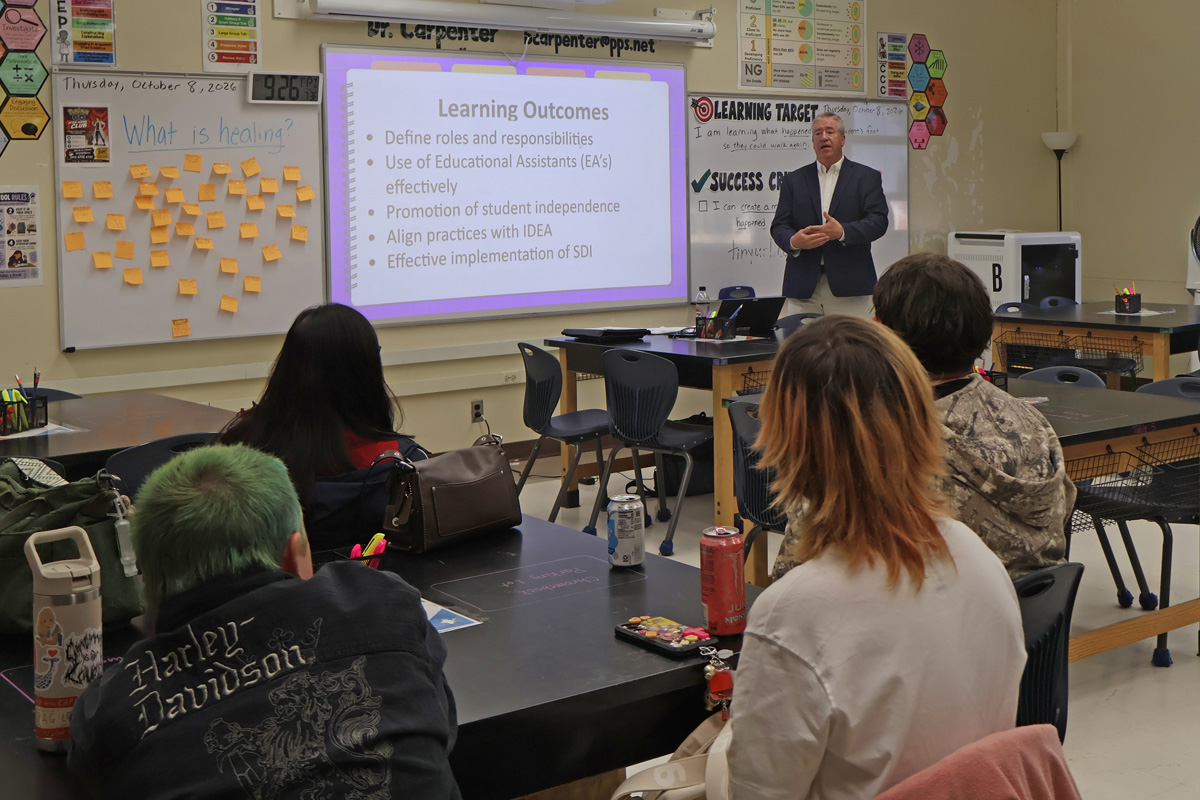
Beyond compliance: Supporting stronger outcomes for special education students
A well-written IEP can meet every requirement on paper. The bigger question is what happens next: Is the student receiving the right support? Are they making progress? That is at the heart of Clackamas ESD Regional Technical Assistance Provider Dan Sheppard’s work. Created in 2023–24 as part of a statewide [...]

Making digital spaces work for everyone
Curb cuts, ramps, and automatic doors help people with disabilities access our buildings. But what makes a PDF, online form, or video accessible to someone with a visual, hearing, cognitive, or motor disability? Access matters in digital spaces, too. “Digital accessibility is about removing barriers,” said Amy Mintonye Paul, Clackamas [...]
