2025-26 Local Service Plan2025-12-17T15:07:05-08:00

2025-26 Local Service Plan

A Message from Clackamas ESD: All In for Kids

Clackamas Education Service District exists because of our children. As one of 19 ESDs across Oregon, our clear mission is to partner with 10 Clackamas County school districts, and many other regional and state organizations, to ensure all children have access to equitable educational opportunities.

We create a local service plan each year to highlight how we’re moving forward with that mission. This document is extensive, because our services are diverse. Our supports fit into four primary categories:

  • Direct special education screening and services to children and youth ages birth to 21, specializing in highly individualized support for students with complex learning challenges
  • Training, coaching and other professional development opportunities for K-12 educators, administrators and other staff, all focused on district academic priorities
  • Multiple supports to school districts that help keep students engaged in school, and create physically and emotionally safe learning environments
  • A range of technology services centered on providing secure, reliable networks and data management and analysis services to dozens of customers

We use a mix of funding sources to provide these services. The “resolution services” you see in this report are those offered to and paid for by all 10 of our partner school districts using State School Fund dollars. All of those services are reviewed, adjusted as needed and approved annually by district superintendents and school boards.

Because a majority of our services are funded by state and federal grants and contracts with users, we review those services in our LSP as well. For example, this year we opened the Clackamas Early Learning Center, which hosts several preschool classrooms for traditionally underserved children, as well as our program that screens children birth to 5 for learning delays. While the center is funded completely through grants, contracts and partnerships, its valuable services are preparing more children to become successful learners as they move into the K-12 system.

Our local service plan is a road map for the coming year, but we stay nimble, always prepared to respond to changing needs in our region. We encourage you to read through this report to explore the many ways we are working with our school districts and other partners to advance our community’s educational landscape. Our deep appreciation for your continued partnership and commitment to our shared mission of “all in” service to the tens of thousands of children in Clackamas County.

In service,

Larry Didway
Superintendent

Larry Didway

Linda Brown
Chair, Board of Directors

Linda Brown

About the Local Service Plan

All 19 education service districts in Oregon must create and regularly update local service plans that reflect their state-mandated mission to promote equal educational opportunities, and provide programs and services to school districts that are best managed regionally. Clackamas ESD’s annual local service plan serves as a roadmap to how we serve our 10 partner school districts in Clackamas County. The plan includes services required by state statute, services to all districts adopted by local school board resolutions, and explanations of services provided by contracts, grants and other partnerships.

Any Oregon public school district may use Clackamas ESD services. In addition, non-public schools, colleges and nonprofit agencies may use some services on a cost-reimbursement basis.

Clackamas country school districts map

The local service plan must address how Clackamas ESD will provide support to component school districts in the following areas:

  • Programs for children with special needs, including, but not limited to:
    • Special education services for at-risk students
    • Professional learning for employees who provide services to children with special needs
  • Technology support, including, but not limited to:
    • Technology infrastructure services
    • Data services
    • Instructional technology services
    • Distance learning support
    • Professional development for employees who provide technology-related services
  • Teaching and learning support, including, but not limited to:
    • Services that help districts meet the requirements of state and federal law, including standards to provide a quality education
    • Services addressing curriculum and school improvement issues
    • Professional learning for employees who provide teaching and learning services
    • Services that assist with data analysis and program evaluation
  • Administrative and support services including, but not limited to:
    • Services designed to consolidate school district business functions
    • Liaison service between the Oregon Department of Education and school districts
    • Registration of children being taught by private teachers, parents or legal guardians, pursuant to ORS 339.035

Clackamas ESD regularly assesses the cost and effectiveness of its programs. Clackamas ESD submits a required annual report to the Oregon Department of Education measuring performance and finances for the previous school year. We also compile student outcome data for the state’s early intervention/early childhood special education report card. We conduct periodic surveys and interviews of ESD advisory groups to gauge satisfaction with programs and services as part of our continuous improvement efforts. We also produce an annual report that provides Clackamas ESD impact highlights. In addition, our local service plan is augmented by individual district reports that show the cost and reach of programs and services provided to each school district during the most recent year.

If a situation occurs that requires an amendment to the local service plan, a resolution to amend the plan will be presented to the Clackamas ESD Board of Directors and partner school districts. The same criteria and process used to approve the original plan will be applied to approve and implement any proposed amendment.

We work collaboratively with our school district partners throughout the year to assess the services we offer and determine any additional needs. We update the local service plan each fall, and it goes through a lengthy series of district and Clackamas ESD approvals before being implemented the following summer:

  • September – November: LSP revised
  • December: LSP presented to district superintendents and the Clackamas ESD Board of Directors for review and approval
  • January – February: LSP presented to local school boards for review and formal adoption; two- thirds of partner districts representing at least 50 percent of students enrolled in Clackamas County school districts must approve the plan, per ORS 334.175 (a) (b)
  • July: LSP implemented

Oregon ESDs collectively receive less than 5 percent of State School Fund dollars to provide regional services. Clackamas ESD spends at least 90 percent of its share of the SSF allocation and its local property tax allocation for services approved by partner school districts. Shared “resolution” services are paid for/available to all districts. Districts can use remaining ESD dollars to buy contracted services and/or receive direct allocations.

  • 90% of Clackamas ESD’s State School Fund money is allocated for direct benefits to school districts, which they receive through shared “resolution” services, contracted services and/or direct payments
  • 10% of Clackamas ESD’s State School Fund money may be used to fund ESD operations

Our District Partners

Clackamas ESD develops and implements programs and services in partnership with our regional school districts. Our regular collaborations with superintendents and other district leaders are critical to guiding and modifying our work.

The Chief Administrators’ Council includes superintendents of all 10 Clackamas County school districts and Clackamas ESD, as well as the president of Clackamas Community College. These leaders meet monthly to collaborate, connect with regional partners, increase shared understanding of current issues and initiatives, and coordinate educational services for our region’s students.

  • Chair Tony Mann, Superintendent, Molalla River School District 35
  • Aaron Bayer, Superintendent, Oregon Trail School District 46
  • Ryan Carpenter, Superintendent, Estacada School District 108
  • Tim Cook, President, Clackamas Community College
  • Larry Didway, Superintendent, Clackamas Education Service District
  • Shay James, Superintendent, North Clackamas School District 12
  • David Kline, Superintendent, Colton School District 53
  • Kathy Ludwig, Superintendent, West Linn-Wilsonville School District 3J
  • Jennifer Patterson, Superintendent, Canby School District 86
  • Jeremiah Patterson, Superintendent, Gladstone School District 115
  • Jennifer Schiele, Superintendent, Lake Oswego School District 7J
  • Dayle Spitzer, Superintendent, Oregon City School District 62

In addition to coordinating the Chief Administrators’ Council, Clackamas ESD facilitates 10 job-alike advisory groups that meet regularly to collaborate on projects, share information and best practices, and problem-solve responses to issues and challenges.

Business

  • Clackamas ESD
    • Carey Pinto
    • Jeremy Pietzold
  • Canby School District
    • Denise Lapp
  • Colton School District
    • Chris Gibb
  • Estacada School District
    • Michael Waer
  • Gladstone School District
    • Rachel Lopez Hopper
  • Lake Oswego School District
    • Stuart Ketzler
  • Molalla River School District
    • Andy Campbell
  • North Clackamas School District
    • Matt Makara
    • Dawna Burke
  • Oregon City School District
    • Jason Jensen
  • Oregon Trail School District
    • Tim Belanger
  • West Linn-Wilsonville School District
    • Son Le Hughes

Communications

  • Clackamas ESD
    • Shirley Skidmore
    • Amy Mintonye Paul
  • Canby School District
    • Kristen Wohlers
  • Colton School District
    • Katrina Raasch
  • Estacada School District
    • Maggie Kelly
  • Gladstone School District
    • Raymond Rendleman
  • Lake Oswego School District
    • Mary Kay Larson
  • Molalla River School District
    • Andrea Watson
  • North Clackamas School District
    • Curtis Long
  • Oregon City School District
    • Caitlin Bergstrom
    • Lisa Normand
  • Oregon Trail School District
    • Garth Guibord
    • Julia Monteith
  • West Linn-Wilsonville School District
    • Andrew Kilstrom

Migrant Education

  • Clackamas ESD
    • Angelita Miller
  • Canby School District
    • Danielle Reynolds
    • Fatima Lopez Ramirez
    • Karent Robles
  • Colton School District
    • N/A
  • Estacada School District
    • Jennifer Behrman
    • Leticia Gonzalez
  • Gladstone School District
    • Petra Hoghova
  • Lake Oswego School District
    • N/A
  • Molalla River School District
    • Tamara Jackson
  • North Clackamas School District
    • Laurie Meisner
  • Oregon City School District
    • Sarah Crane
    • Eva Franco
  • Oregon Trail School District
    • Rachael George
  • West Linn-Wilsonville School District
    • Barb Soisson
    • Yanette Ayala

English Learners

  • Clackamas ESD
    • Dan Kimbrow
  • Canby School District
    • Danielle Reynolds
  • Colton School District
    • David Kline
  • Estacada School District
    • Jennifer Behrman
    • Karen Greene
  • Gladstone School District
    • Petra Hoghova
  • Lake Oswego School District
    • Scott Schinderle
  • Molalla River School District
    • Tamara Jackson
  • North Clackamas School District
    • Laurie Meisner
  • Oregon City School District
    • Sarah Crane
    • Kelly Gavrich
  • Oregon Trail School District
    • Rachael George
    • Danielle Carey
    • Erin Barton
  • West Linn-Wilsonville School District
    • Barb Soisson
    • Yanette Ayala
    • Elisa Lee

Facilities

  • Clackamas ESD
    • Tim Witcher
    • Pam Bonner
    • Mark Dodge
    • Marvin Hill
  • Canby School District
    • Bret Adkins
    • Shawna Grant
  • Colton School District
    • Eric Bjarnson
  • Estacada School District
    • Michael Waer
    • John Simpson
  • Gladstone School District
    • Rachel Lopez Hopper
    • Ivan Leigh
  • Lake Oswego School District
    • Tony Vandenberg
    • Brent Paul
  • Molalla River School District
    • Tony Tiano
    • Shalin Akins
  • North Clackamas School District
    • David Kruse
    • Rob Martinez
    • Teresa Neff-Webster
    • Leif Palmer
    • Amanda Wall
  • Oregon City School District
    • Michael Sweeten
    • Tom Larson
  • Oregon Trail School District
    • Chelsea Lincoln Lane
    • Bill Wetherbee
  • West Linn-Wilsonville School District
    • Pat McGough
    • Jeff Chambers
    • Steve Matthias

Human Resources

  • Clackamas ESD
    • Chelsi Reno
    • Carrie Hoffman
  • Canby School District
    • Andy McKean
  • Colton School District
    • Katrina Raasch
  • Estacada School District
    • Kelly Hayes
    • Lisa Akins
  • Gladstone School District
    • Tammy Tracy
  • Lake Oswego School District
    • Donna Watson
  • Molalla River School District
    • Jennifer Ellis, C0-Chair
  • North Clackamas School District
    • Michelle Riddell
    • Alma Morales Galicia
    • Will Ruehle
    • Keylah Boyer
    • Joe Bridgeman
  • Oregon City School District
    • Lisa Normand
    • Bethany Bowers
  • Oregon Trail School District
    • Ken Bucchi
    • Chelsea Leymaster
  • West Linn-Wilsonville School District
    • Shyla Waldern

Safe Schools/Emergency Management

  • Clackamas ESD
    • Pam Bonner
    • Mark Dodge
    • Dan Kraus
    • Tim Witcher
  • Canby School District
    • Bret Adkins
    • Shawna Grant
    • Andrew Olney
  • Colton School District
    • Chris Gibb
  • Estacada School District
    • Michael Waer
  • Gladstone School District
    • Jeremiah Patterson
  • Lake Oswego School District
    • John Parke
    • Kellie Snaadt
  • Molalla River School District
    • Amy Chapin
    • Jefferey Hillhouse
  • North Clackamas School District
    • David Kruse
    • Kimmy Boone
  • Oregon City School District
    • Jeana Buxton
    • Michael Sweeten
  • Oregon Trail School District
    • N/A
  • West Linn-Wilsonville School District
    • Jeremy Nichols
    • Pat McGough

Special Education

  • Clackamas ESD
    • Jared Hayes
  • Canby School District
    • Kathy Sullivan
  • Colton School District
    • Christie Dudley
  • Estacada School District
    • Jason Hobson
  • Gladstone School District
    • Michael Shelton
  • Lake Oswego School District
    • Scott Schinderle
  • Molalla River School District
    • Robin Shobe
  • North Clackamas School District
    • Fiorella Kassab
  • Oregon City School District
    • Melissa Berg
  • Oregon Trail School District
    • Katie Winning
  • West Linn-Wilsonville School District
    • Lauren Brigsby

Teaching and Learning

  • Clackamas ESD
    • Ewan Brawley
    • Kayla Bell
    • Angie Kautz
    • Schay Esparza
  • Canby School District
    • Danielle Reynolds
  • Colton School District
    • David Kline
  • Estacada School District
    • Jennifer Behrman
  • Gladstone School District
    • Scott Sullivan
  • Lake Oswego School District
    • LaKeyshua Washington
  • Molalla River School District
    • Tamara Jackson
  • North Clackamas School District
    • Tammy O’Neill
    • Dianna Ngai
  • Oregon City School District
    • Sarah Crane
  • Oregon Trail School District
    • Rachael George
    • Kim Ball
  • West Linn-Wilsonville School District
    • Barb Soisson

Technology

  • Clackamas ESD
    • Jeremy Pietzold
    • Chris Kolb
    • Andrew Winter
    • Matthew Threlfall
    • Daniel Hunter
  • Canby School District
    • Bret Adkins
  • Colton School District
    • Chris Gibb
  • Estacada School District
    • Kristy Cheshier
  • Gladstone School District
    • Scott Sullivan
  • Lake Oswego School District
    • James Miller
  • Molalla River School District
    • Chris Shaw
  • North Clackamas School District
    • Leigh Anne Scherer
  • Oregon City School District
    • David Klusmann
  • Oregon Trail School District
    • Scott Coleman
  • West Linn-Wilsonville School District
    • Khanh Duong

Teaching and Learning

The Clackamas ESD teaching and learning team collaborates with regional school districts to enhance teacher and administrator professional learning opportunities. We offer a range of high-value opportunities through our in-house content specialists and contracted partnerships.

Our team is responsive to the evolving needs of districts. In addition to ongoing support in STEM, math, early literacy and multilingual learner programs, we are prepared to assist with curriculum adoptions and help districts navigate the emerging role of artificial intelligence in education.

Key leaders:
Ewan Brawley, Assistant Superintendent
Kayla Bell, Assistant Director, Teaching and Learning
Angie Kautz, Assistant Director, Student Services
Schay Esparza, Assistant Director, Data, Evaluation and Information Systems
Dawnnesha Lasuncet, Equity and Inclusion Coordinator

Curriculum, instruction and assessment

Our services, shaped by active collaboration with the teaching and learning advisory, include:

  • Professional development that promotes best and emerging practices, enabling teachers to effectively use data for improving student experiences and fostering continuous improvement
  • Guidance for curriculum adoptions, focusing on selecting high-quality materials aligned with state standards
  • Assistance in interpreting state and federal policies related to assessments, graduation requirements and improvement plans
  • Representation and advocacy for districts in key work groups and task forces, such as the Region One Assessment Consortium, Oregon Association of Education Service Districts/Oregon Department of Education program cabinet, South Metro STEM Partnership executive advisory board, Statewide Literacy Excellence Network, and Oregon Department of Education English language acquisition and artificial intelligence collaboratives
  • Consultation with district and school leaders in areas including early literacy, second language acquisition (including dual language immersion), math, STEM, health and educator mentor development

Professional learning opportunities and networks

Our high-quality professional development is aligned with adult learning principles and best practices. It fosters educator efficacy, equity, assessment literacy, data-driven decision- making and personalized learning experiences. Serving as a liaison with districts, we collaborate to prioritize and plan professional development opportunities, whether tailored to classroom and school staff or delivered at a countywide level.

Professional learning includes:

  • Support and training to enhance the capacity to meet the needs of diverse learners, with a focus on culturally responsive curriculum, practices, and data and assessment literacy
  • Equity-centered, culturally responsive instruction and assessment
  • Instructional practices to support English learners and emergent bilinguals
  • Mentor support for classroom teachers and building leaders
  • Curriculum development assistance
  • Best practices for literacy instruction and assessment, including sequential, multi-sensory approaches to teaching literacy
  • Best practices for math instruction and assessment
  • Strategies to increase inclusive practices in classrooms and
    school buildings
  • Support for building effective secondary school schedules
  • Guidance on leveraging artificial intelligence tools and practices

Networks include:

  • South Metro-Salem STEM Partnership
  • Oregon Math Project and standards implementation
  • Oregon Science Leaders
  • Oregon Ambitious Science teaching community
  • Oregon OpenSciEd community
  • Building an Equitable NGSS-Aligned K-12 Science Program
  • New teacher community of practice
  • Literacy communities of practice for coaches and administrators
  • EdTech Cadre and AI Innovators Forum

Research and program evaluation support

We work with district administrators and teachers to help them use the most effective strategies to reach students. Our support includes:

  • Technical assistance with development of program evaluation plans, logic models and quantitative/qualitative data analysis
  • Creation of equity briefs that disaggregate achievement, discipline and other data
  • Survey design, consultation, training and reporting, including translations in multiple languages and interpretation of results
  • Evaluation of curriculum adoption and implementation
  • Support in developing longitudinal growth targets and Student Investment Account progress markers
  • Training and consultation on best practices in culturally responsive data collection and analysis
  • Applied research studies to support continuous improvement efforts
  • Access to the Hanover Research Library, which provides insights into curricular, teaching, technology and operational topics

Multilingual and English learners network

Clackamas ESD supports services for emergent bilingual learners in programs for both multilingual and English learners. We share resources on all aspects of serving multilingual and English learners, including instruction, assessment, compliance and family involvement, with our component districts. Clackamas ESD’s supports include:

  • Support with Title III district plans
  • Maintaining compliance with state and federal law
  • English language proficiency assessments
  • Training on use of the Sheltered Instruction Observation Protocol (administrators, teams)
  • Teacher training on instructional best practices
  • Training on best practices in interpretation and translation
  • Dual Language Immersion Cadre
  • Guidance on building academic language
  • Supporting newcomers and recent arrivals, including registration processes, transcripts evaluation and course placements, welcoming environments, and sample policies and procedures

Lending library leadership team

This leadership team is composed of exceptional science, technology, engineering and mathematics teachers, along with teachers on special assignment from Clackamas County. They meet monthly to develop, test and provide guidance on the creation of the lending library — a curated collection of lessons, kits and devices designed to expand culturally relevant and engaging STEAM learning experiences for traditionally underserved student populations and beyond.

Statewide assessment support and training

We provide training, consultation and support to assessment coordinators in each of our partner districts.

Migrant Education Consortium

We coordinate the Migrant Education Consortium, comprised of eight local districts, which provides summer school, graduation support, preschool services, family engagement and other supplemental support to preK-12 migrant students. We also provide technical support to help all districts comply with state and federal Title IC requirements.

Career and Technical Education Consortium

Our teaching and learning team coordinates C-TEC, which facilitates career education and work-based learning for high school students in collaboration with Clackamas Community College. C-TEC’s work is guided by a steering committee of district and community partners. Funding for the program comes mainly from the federal Carl D. Perkins Grant, coordinated through ODE.

C-TEC Youth Services

C-TEC Youth Services supports 16- to 24-year-old out-of-school youth in obtaining ongoing education and/or employment. Our career advisers help youth create goal plans that best fit their interests and strengths, and connect to the many resources and opportunities available to them. The program is funded through a Workforce Innovation Opportunity Act grant provided through Clackamas Workforce Partnership. The program emphasizes connections and partnerships among regional school districts, the Career and Technical Education Consortium, Clackamas Community College and other county programs for out-of-school youth.

Ongoing feedback to meet district needs and priorities

We ask educators in our region to respond to periodic surveys about the quality and effectiveness of our services. Evaluation metrics are reviewed with district staff through formal and informal meetings and discussions.

Evaluation of staff development

We use surveys and direct feedback from educators to evaluate department-sponsored professional development activities. We also collect and analyze a variety of data to determine the impact of our grant programs on meeting district, school, classroom and student-level goals. Data are determined by both program-specific metrics (such as Title IC and Perkins) and through discussion with advisories, education partners and work groups.

Student Services

Operating across departments at Clackamas ESD but formally housed within our teaching and learning structure, the student services team promotes and supports practices that cultivate healthy and inclusive school communities so that children, families and educators have access to learning environments that are both physically and emotionally safe. The support this growing team provides is made possible primarily through Oregon Department of Education Integrated Programs Technical Assistance funds. The integrated programs include: High School Success, Student Success Act, Continuous Improvement Planning, Career and Technical Education, Every Day Matters and Early Indicator Intervention Systems.

Key leaders and staff:
Ewan Brawley, Assistant Superintendent
Angie Kautz, Assistant Director, Student Services
Schay Esparza, Assistant Director, Data, Evaluation and Information Systems
Sandy Mathewson, Mental Health, Safety and Prevention Specialist
Sierra Wilson, Crisis Prevention and Response Specialist
Hoa Nguyen, Student and Community Engagement Specialist
Elaine Merighi Morelock, Support Staff Partnership and Learning Coordinator
Dianne Holme, Health Services Coordinator
Dawnnesha Lasuncet, Equity and Inclusion Coordinator
Alexis Burnett, Research Analyst
Melanie Inns, Administrative Assistant

Student mental and emotional health

  • Counselor support: The team offers support for school counselors and other mental health professionals from across all 10 regional districts. This support includes professional learning based on needs expressed by the counselors themselves, collaboration opportunities and shared resources.
  • Suicide prevention: This is a key area of support, with regional and on-demand, district-specific training provided in QPR (Question, Persuade and Refer), ASIST (Applied Suicide Intervention Skills Training) and YouthSAVE. The team also liases closely between districts and key community partners such as the county suicide prevention coordinator.
  • Regional Flight Team: A flight team provides mental health after-care for students and staff following a crisis or tragedy. We worked with a design team of representatives from all districts to develop a calibrated flight team response that can be utilized when districts request additional support from the Regional Flight Team. We provide the training on these calibrated processes and procedures, as well as coordinate the logistics of recruiting and organizing Regional Flight Team members whenever requests are received.

Physical health and safety

  • School nurse support: The health services branch of the team offers support for school nurses and other health professionals from across all 10 partner districts. This support includes professional learning based on needs expressed by the nurses themselves, collaboration opportunities and shared resources. This team also serves as a liaison between our district nurses and the Oregon School Nursing Association and both the state and county departments of health.
  • School nurse lending library: In addition to supporting the professional learning of school nurses, our team also provides training tools and resources to help school nurses meet the demands for training paraprofessionals and others in their individual schools.
  • Behavior safety assessment: Our team collaborates closely with the Clackamas County Department of Juvenile Justice to provide support to districts on Level 1 and Level 2 behavioral safety assessment.

Safe and inclusive learning environments

  • Bias incident response: We have developed a suite of supports focused on the implementation of Every Student Belongs, a State Board of Education policy that confirms all students, employees and visitors in public schools are entitled to learn, work and participate in an environment that is safe and free from discrimination, harassment and intimidation. Resources include a digital reporting tool, staff training, a bias incident response manual, communication templates and coaching/consultation.
  • Trauma-informed practices: We provide professional learning, consultation and coaching to support district professional learning/training plans for education assistants, front office staff, bus drivers and others who play a key role in creating safe and inclusive learning environments for students. The training and resources focus heavily on trauma-informed practices. The social and emotional climate of a school can impact student engagement in school activities, as well as relationships with other students and staff. A positive social and emotional climate is conducive to effective teaching and learning and has an impact on academic achievement.
  • Culturally responsive practices: We support our district partners in strengthening student and community engagement by providing professional learning, consultation and coaching for districts related to culturally responsive practices. This support includes a training series for front office staff and coaching for attendance teams focused on the root causes of absenteeism.

Systemic and sustainable improvement

  • Evidence-based planning and decision making: The team has capacity to help districts collect and use relevant data to make thoughtful decisions about targeting resources and making other improvements to elevate student achievement. We provide multiple data services that include both the technical creation and implementation of data tools, and consultation and coaching around the analysis and reporting of the data.
  • Grant-related technical support: We offer consultation, coaching and advocacy for districts as they navigate complex funding frameworks. Our team liaises with the Oregon Department of Education to ensure that we
    can accurately provide guidance to districts on the application, needs assessment, budgeting, implementation, reporting and evaluation aspects of multiple grants and funding frameworks.

Outcome #1: Student Emotional Well-being and Mental Health

Regional implementation of systems, programs and services that promote student social emotional well- being and mental health with particular focus on students who have been historically underserved in the education system.

Outcome #2 Student Health and Safety

Regional implementation of systems, programs and services that promote student physical health, safety and well-being with particular focus on students who have been historically underserved in the education system.

Outcome #3 Safe and Inclusive Learning Environments

Regional implementation of psychologically and physically safe and inclusive learning environments with a particular focus on students who have been historically underserved in the education system.

Outcome #4 Systemic and Sustainable Improvement

Regional implementation of grant management and investment practices that create sustainable, systemic improvements, with particular focus on students who have been historically underserved in the education system.

Strategy #1

Provide consultation and professional services relevant to specific topics aligned with stated outcomes in a variety of formats that include both remote and in-person opportunities.

Strategy #2

Provide professional learning, training and resources relevant to specific topics aligned with stated outcomes in a variety of formats that include both remote and in-person opportunities.

Strategy #3

Facilitate collaboration opportunities relevant to specific topics aligned with stated outcomes in a variety of formats that include both remote and in-person opportunities.

Strategy #4

Provide systems planning and performance support for the systematic use of data in planning and decision making aligned with stated outcomes.

Special Programs

Some students in our region experience complex cognitive, physical, emotional or behavioral challenges that impact their ability to learn. Our partnership with area school districts gives them additional capacity
to serve the educational needs of all of these children. Districts refer school-age children experiencing significant learning challenges to us, and we provide individualized services tailored to their needs. We also assist older students in transitioning to the next stages of their lives by building employable skills and independent living capacity.

We provide educational support for students who are in short- and longer-term residential facilities. We work closely with families, caregivers and school district partners to develop personalized learning plans that will allow students to return to their home schools as quickly as possible.

In addition, we provide other specific services throughout the region and state, including staff support, training and assistance with federal and state programs in areas such as occupational/physical therapy.

Our goal is to continue to enhance and diversify our resolution services to meet all districts’ general programmatic needs, while also creating new options to fulfill the many individual district requests for support we receive. We partner with district special education staff, and focus heavily on providing consultation, coaching and professional development to districts to better help them deliver multi-tiered support to address the academic, adaptive, behavioral, communication and social/emotional needs of this valued group of students.

Key leaders:
Jared Hayes, Director, Special Programs
Stacey Sibley, Assistant Director, Heron Creek Therapeutic Program
Teresa Copeland, Assistant Director, Life Enrichment Education Program
Kriss Rita, Transition Network Facilitator

Life Enrichment Education Program

Our Life Enrichment Education Program provides a comprehensive education for students grades kindergarten through high school transition experiencing complex disabilities and communication needs. Through Individualized Education Programs, LEEP supports students in accessing academic, social-emotional, communication and life skills curriculum and instruction. Multidisciplinary classroom teams include special education teachers, educational assistants, speech-language pathologists, occupational therapists, physical therapists, behavior specialists, nurses, adaptive physical education teachers and others as needed. The program focuses on academics, communication, personal management, decision making, independence, self-advocacy, practical living skills, vocational skills, leisure/recreation activities, social skills and access to a full life.

Heron Creek Therapeutic Program

Our Heron Creek program, located on the Marylhurst Commons campus, supports K-12 students experiencing significant social and emotional challenges, addressing their barriers to success and helping them build the self-regulation skills that enable them to make a successful return to their home school. Districts’ Individualized Education Program teams refer students to our program. Our evidence-based strategies emphasize collaborative problem-solving in a trauma-informed learning environment. We use strength-based assessments and collaborate with local systems of care. As needed, we provide a range of additional supports, including speech and language therapy, occupational therapy, specialized behavioral consultation, psychiatric consultation with the family’s medical providers, and nursing supports.

Parrott Creek

We bring an educational team of teacher and coach to the Parrott Creek Ranch, a residential program for youth who are stepping out of incarceration or who are returning from residential placements outside of Oregon. These professionals are supervised and supported by an administrative team in the department.

Local educational agency motor team

We provide occupational and physical therapy staff support upon request from our school district partners. These staff members provide consultation, assessments and direct services, including ongoing support for students with Individualized Education Programs where these services are required.

Medicaid and school-based health services

Medicaid’s fee-for-service process allows districts to recover the costs of providing health supports to eligible students attending schools and programs in their respective districts. Clackamas ESD assists school districts throughout the state in identifying and accounting for time spent on reimbursable activities, so that health and education funds are directed appropriately. We help staff use tools to collect the necessary data and submit claims/reports.

Clackamas ESD also assists school districts throughout the state with the process of Medicaid administrative claiming, a three-times-a-year survey to collect federal dollars for connecting eligible students with community health supports. We use a “train the trainer” model to build district capacity to handle the surveys and serve as a liaison to the Oregon Health Authority to develop cost pools, process match payments and resolve questions.

Clackamas ESD serves as an educational agency and participates in Medicaid fee-for-service as a billing provider. We obtain parent consent for students enrolled and attending Clackamas ESD school-age programs. We provide covered health services, documentation support and training to staff working in these programs. The ESD receives all billing reimbursement and reinvests into the ESD’s budget to offset costs and develop equitable program services.

Clackamas ESD also participates in Medicaid administrative claiming to help offset costs and develop equitable program services.

Transition network facilitation

Our transition network facilitation program supports high school and post-high school personnel in Clackamas, Hood River, Wasco, Gilliam and Sherman counties in helping students with developmental disabilities ages 16 to 21 shift from school to integrated, competitive employment. We share best practices, strategies and curriculum that help students explore vocations, gain work experience and set post- secondary goals. We’re also a convener, connecting educators with relevant agencies to identify and address school-to work transition barriers.

Regional technical assistance provider

This is a collaborative partnership position with the Office of Enhancing Student Opportunities within the Oregon Department of Education and the Oregon Association of Education Service Districts. Each ESD provides regional professional development and targeted technical assistance to special education teachers, case managers and administrators. Technical assistance and professional development are provided via in-person and/or virtual means at no cost to districts.

We gather data through surveys and direct interviews with district directors every summer to identify areas of strength and growth to inform plans for the coming year.

We consistently work to diversify our services to support a continuum of district requests and needs, adjusting our direct services in LEEP and Heron Creek and facilitating positive transitions for students back to their home school district programs; and providing consultation, coaching and professional development for districts to address the complete spectrum of students’ needs through multi-tiered systems of support.

Early Learning

Clackamas ESD offers high-quality programs for infants, toddlers and preschoolers that focus on inclusive practices, social emotional development and pre-academic development. Our early learning professionals are experts in early childhood education, early intervention/early childhood special education, and helping families and child care providers learn how to support children through their educational journey.

We offer services in the following areas:

  • Early intervention/early childhood special education programs for young children who demonstrate disabilities or delays
  • Head Start to Success free preschool program for young children experiencing poverty, as well as comprehensive services for
    their families
  • Preschool Promise free preschool program for young children whose families have an income up to 200 percent of the federal poverty level
  • Child care resource and referral, providing coaching and technical assistance to support high-quality child care

Our early learning department also is prepared to support district efforts to effectively partner with existing child care and pre-K providers, implement transition activities for incoming kindergarten students and their families, and explore opportunities for expanding access to district-run pre-K programs. Clackamas ESD received one-time approval in 2021 to use early learning funds to purchase a building adjacent to our Sunnybrook campus. This facility will allow us to expand our early learning programs. Our Clackamas Early Learning Center opened in fall of 2024. The center hosts our evaluation center, two Head Start to Success classrooms, a PEER (positive engagement, empathy and relationship-building) classroom, a Preschool Promise classroom, and a partnership with ClackCoKids for two Early Head Start classrooms. We will serve approximately 100 children ages 3-5 and 16 children ages 1-3 in these classrooms during the 2024-25 school year.

Our early learning programs are financed completely through contracts, grants and partnerships. Even though no resolution services are provided, our programs provide significant value to our districts in preparing our young learners for kindergarten.

Key leaders:
Ewan Brawley, Assistant Superintendent
Sara Snow, Director, Early Intervention/Early Childhood Special Education Programs
Brett Walker, Assistant Director, Early Learning Programs (Head Start to Success, Preschool Promise and CCR&R)

Child care resource and referral

CCR&R services support high-quality child care throughout our region. We deliver professional development, a robust training calendar that is designed to the professional learning needs of child care providers, and technical assistance and coaching to child care providers serving children ages 0-12 throughout Clackamas County. Our team provides additional support that helps child care providers earn licenses, as well as inclusion on the Oregon Registry and quality ratings in the state’s Spark program. CCR&R also collaborates closely with the early intervention/early childhood special education team to promote and expand inclusive practices in early childhood settings.

Early intervention services (birth to age 3) and early childhood special education (ages 3-5)

Clackamas ESD delivers EI/ECSE support to young children who exhibit delays or disabilities that affect their development and learning. We coordinate services and provide specialized consultation and instruction at no cost to families. We work hard to support inclusive opportunities for young children experiencing disabilities. We provide services in their homes, local preschools and child care centers. In 2024, we served more than 1,500 children across Clackamas County.

Early childhood evaluation

Through contracts with some county school districts, Clackamas ESD conducts comprehensive evaluations of children ages birth to 5 suspected of having developmental delays or disabilities to assess eligibility for EI/ECSE services. Our specialized evaluation team includes early childhood specialists, speech and language pathologists, occupational therapists, physical therapists and school psychologists. Evaluations include:

  • Play-based observation
  • In-depth interviews with family members
  • Assessment of communication, adaptive, social/emotional, fine, gross motor and cognitive skills

We completed 632 such evaluations in 2024.

Head Start to Success

Head Start to Success provides publicly funded, developmentally appropriate and culturally responsive preschool to 3- and 4-year-old children who are experiencing poverty. With services based in the Canby, North Clackamas and Oregon Trail school districts, Head Start to Success served a total of 222 children in the 2023-24 school year. Approximately 30 percent of the children we serve also receive early childhood special education services. Our robust approach to family engagement provides every family with a home visitor who works with them to set goals, access resources in their community, and support children’s learning and development at home. We also provide dental health services, nutrition, mental health support, social services and parent education.

Preschool Promise

Our new Preschool Promise classroom, located in the Clackamas Early Learning Center, provides free, high- quality preschool to 20 children ages 3-5. We are operating this classroom in partnership with the Future Generations Collaborative to provide a culturally responsive educational program for children in Clackamas County whose families identify as Native American. This includes incorporating Native language, cultural norms and values into the learning environment.

Infant early childhood mental health consultation planning grant

In collaboration with the Clackamas County Children’s Commission, Clackamas ESD’s early learning department co- convenes a stakeholder workgroup that is tasked with planning for the implementation of mental health consultation services for child care providers starting in 2025. Supporting young children’s mental health through a consultation model has been identified as a key strategy for preventing suspensions and expulsions in early childhood settings.

Community partnerships

The early intervention/early childhood special education team continues multiple partnerships — including with Head Start to Success and the Clackamas County Children’s Commission Head Start program — to create family-centered early learning systems aligned with best practices. Other current examples:

  • Staff from our early childhood special education and Head Start to Success teams participated in “Learning Experiences: An Alternative Program for Preschoolers and Parents,” a program facilitated by the University of Denver. The program focuses on implementing inclusive practices in early learning programs. We are hosting a pilot project in our service region in two classrooms — one in an early childhood special education classroom, and one in a Head Start classroom in the North Clackamas School District.
  • Our early learning team continued development of the early childhood education sector plan for Clackamas County with the Clackamas Early Learning Hub. The sector plan identifies needs to expand early learning opportunities for children and their families.
  • Our early learning leadership team continued participation in the Clackamas County Early Childhood Committee. CCECC brings community partners together monthly to discuss and share community resources.
  • We work closely with stakeholders across the county on supporting inclusion. Our community inclusion team works to foster inclusion of young children by providing training and coaching on the Pyramid Model for Promoting Social Emotional Competence in Infants and Young Children. Through our community inclusion team work, we have added community sites committed to improving quality as it relates to inclusive practices.

The opening of the Clackamas Early Learning Center has created opportunities for new partnerships. For example, we are partnering with the Future Generations Collaborative to build capacity around culturally responsive services for children and families in Clackamas County who identify as Native American. Additionally, we are partnering with the Clackamas County Children’s Commission to provide healthy meals to students and to provide care for infants and toddlers in two classrooms.

We also participate in the Early Learning Hub of Clackamas County governance council, which seeks to improve the early learning system by making it easier for families to navigate, and increasing access to/enrollment in quality child care and preschool.

In addition, our early learning team has continued partnerships with several school districts, including Estacada, Gladstone and West Linn-Wilsonville. We’re a founding partner of the Gladstone Center for Children and Families, an innovative early learning center that operates a Teaching Preschool model classroom, and offers professional development and parent education. We also frequently partner with North Clackamas School District early learning staff.

Student outcomes/state report card

Our annual state EI/ECSE report card reflects the progress of the children we serve. Specifically measured are social-emotional development, knowledge and skill acquisition, and use of appropriate behavior. We also are measured on our ability to provide services in a home or regular childhood program. We meet or surpass all state metrics, and the frequency with which all of our services are delivered significantly exceeds state averages. For example, 90 percent of children enrolled in our early learning and early childhood special education programs receive service at least once a week, compared to the statewide average of 74 percent.

Professional development

We provide ongoing professional development for staff. For example, our educational assistants have a dedicated professional learning community that allows regular access to staff development opportunities and peer-to-peer learning. Additionally, staff in our early learning programs participate in pre-service and ongoing professional learning opportunities focused on the implementation of the Pyramid Model for Promoting Social-Emotional Competence in Infants and Young Children, along with other topics that support high-quality classroom practices. This year, we are partnering with the University of Denver’s Positive Early Learning Experiences Center to provide staff training on inclusive practices. We also are participating in the Children’s Institute’s Early School Success Academy to focus on our instructional approaches across programs, with a specific emphasis on early language and literacy development.

Administrative services

Clackamas ESD offers an array of administrative support and collaboration to school district leaders throughout our region. While we’ve highlighted administrative services offered via resolution, contracts, grants and other funding sources, much of our administrative support doesn’t fall cleanly into one category. A few examples of those services:

Convening district leaders: We facilitate regular meetings of the Chief Administrators’ Council (all Clackamas County school district superintendents, plus the president of Clackamas Community College) and 10 other role- specific advisory groups.

Providing equity and inclusion support: Clackamas ESD’s equity and inclusion coordinator creates equity- focused professional development opportunities, and provides policy and practices consultation and coaching
for administrators and educators across our region. This position is housed in human resources and funded through the Student Success Act and teaching and learning dollars. Clackamas ESD continues to assist our partner districts with addressing barriers to student wellness and academic success that intensified as a result of the COVID pandemic.

Serving as a regional and state liaison: We are closely aligned with partners at the Oregon Department of Education, Clackamas County and other agencies, helping to influence and gain clarity around decision making and policies that affect our regional schools.

Facilitating Regional Teacher of the Year selection: We promote nominations and coordinate selection of the Regional Teacher of the Year as part of the Oregon Teacher of the Year program. We are a statewide leader in generating accolades for great teachers: In 2024, 40 percent of all nominations and applications for Oregon Teacher of the Year came from Clackamas County. In September 2024, we honored Robert Parker, an architecture and design teacher at the Sabin-Schellenberg Professional Technical Center in the North Clackamas School District, as our 2024-25 Regional Teacher of the Year.

Coordinating regional art show: Each spring, we host a student art show to highlight the talents of students throughout Clackamas County. We coordinate the regional show in partnership with district middle and high school art teachers. The event culminates each year with an artist reception and awards ceremony. Nearly 200 students from nine Clackamas County school districts took part in the 2024 art show, and nearly $135,000 in potential scholarship money and other prizes were awarded to more than 40 student artists.

Key leaders:
Carey Pinto, Chief Financial Officer
Chelsi Reno, Chief of Human Resources
Shirley Skidmore, Director, Strategic Communications
Dawnnesha Lasuncet, Equity and Inclusion Coordinator

Substitute teacher registration

Clackamas ESD maintains an online registry for substitute candidates in all Clackamas County districts, and reviews all registrations. After registering, substitutes can access required training and store proof of training completion. Districts use the registry to search for teachers with specific endorsements, and to review candidate information, such as background check results.

School announcement network

The FlashAlert Network, serving all school districts in Clackamas County, distributes emergency messages, breaking news, weather closures and news releases to local media outlets for broadcast and web display.

Home school registration

As required by Oregon law, Clackamas ESD maintains an online database of homeschooled students, accessible to all partner districts.

Delivery services

Clackamas ESD provides delivery of instructional materials, printing projects, data, testing materials and correspondence to all school districts twice a week. We also provide delivery service to other metro-area schools via Multnomah ESD and Northwest Regional ESD.

Government relations

Clackamas ESD contracts with a registered lobbyist to provide support to Clackamas County school districts.

Human resources consultation

  • Personnel management
  • Employee contract management
  • Customer service support in using data systems
  • Labor and employment law
  • “Grow your own” teacher pathways program
  • Staffing and recruitment services

Financial and safety consultation and advocacy

  • Support and consultation in managing multiple finance systems, including payroll, accounts payable, fixed asset accounting, general accounting, fiscal analysis, and interpretation of local budget law and public bidding rules
  • Assistance in filing budget documents with appropriate agencies
  • Full business management services
  • Facilities services
  • Safety and emergency management training and consultation

Printing services

  • Graphic design pre-press assistance
  • High-quality production of brochures, fliers and other specialty materials (all stored electronically for future reference and use)

Communications services

  • Website development, maintenance and hosting
  • Communications audits
  • General communications and outreach support
  • Crisis communications and management support

We undertake an annual financial audit in accordance with federal, state and General Accounting Standards Board requirements. Our goal each year is to have an “unqualified opinion,” free from major findings.

Our printing services and communications teams maintain highly competitive pricing for their services compared to those available through other regional vendors.

We consult regularly with our advisory members to get feedback on our services and how we can improve our support to districts.

Technology

Technology plays a foundational role in school operations, and its role has been elevated over the last several years with the growing reliance on online interactions. Clackamas ESD’s technology services program is highly regarded regionally, offering support not only to our partner Clackamas County school districts, but to other school districts, governments and non-profit agencies throughout the state.

Our experienced, customer-focused team provides customer support and services in several core areas:

  • Network and server administration and operations
  • Finance and human resources management
  • Student information and data management
  • Data analysis
  • Cybersecurity
  • Telecommunication management

Our technology team is an active inter-agency collaborator. We’re a member of the Oregon Student Information System Consortium, which coordinates the statewide Synergy student information system contract. We’re also a key partner in Clackamas County’s initiatives to expand its broadband fiber-optic network, and we serve as a major node for Link Oregon in the Portland metro area.

Key leaders:
Jeremy Pietzold, Chief Information Officer
Chris Kolb, Assistant Director, Data and Information Systems
Andrew Winter, Information Security Analyst
Matthew Threlfall, Systems Infrastructure Supervisor
Daniel Hunter, Technology Supervisor

Network and information security services

  • Internet access, with a focus on working with providers to increase delivery capacity, speed and reliability
  • Network design for both wired and wireless district online networks
  • Internet firewall maintenance and yearly audits to ensure maximum protection from security threats
  • Network and server status monitoring to provide proactive alerts on server outages and monitor usage trends and capacity
  • Comprehensive network security configuration and monitoring
  • Web filtering that restricts access to certain web pages
  • Computer server administration to manage infrastructure for critical data systems
  • Disaster recovery to protect mission-critical systems from failure
  • Incident response planning to be prepared in the event of a cyberattack
  • Internet services vulnerability monitoring and remediation

Finance and human resources system

We deliver and maintain Infinite Visions software for use in finance and human resources operations. Infinite Visions is designed for K-12 school districts and used by more than 120 Oregon districts.

Document image/storage system

Our system directly integrates document archival into Infinite Visions’ existing business software and workflows.

Clackamas ESD is proud of the solid reputation we’ve built as a trusted technology partner. In addition to the Clackamas County school districts we serve, we hold data center service contracts with the following local, regional and state partners. These strong partnerships reduce data center and equipment replacement costs, benefiting all clients.

  • Cascade Heights Charter School
  • Christ the King School
  • City of Gladstone
  • City of Happy Valley
  • City of Hillsboro
  • City of Milwaukie
  • City of Oregon City
  • City of Sandy
  • City of West Linn
  • Clackamas Community College
  • Clackamas County
  • Clackamas County Children’s Commission
  • Clackamas County Library System
  • Clackamas Fire District #1
  • Clackamas River Water
  • Clackamas Water & Soil Conservation District
  • Good Shepherd Community School
  • Gresham-Barlow School District
  • Harmony Academy
  • Hermiston School District
  • Hoodland Fire District
  • LaSalle Preparatory High School
  • LINK Oregon
  • Marylhurst Commons
  • Multnomah Education Service District
  • Newberg School District
  • Northwest Regional Education Service District
  • Oregon Health & Science University
  • Oregon Institute of Technology
  • Park Academy
  • Portland Public Schools
  • Reynolds School District
  • St. John the Apostle Catholic School
  • State of Oregon – Department of Administrative Services
  • Summit Learning Charter
  • Sunrise Water
  • Yamhill-Carlton School District

Student information management software

We deliver Edupoint Synergy, which provides an integrated platform to manage student data, scheduling, grade reporting, classroom administration and special education records.

Data center hosting

We provide rack space in Clackamas ESD’s data center for districts to house their technology equipment. This shared resource lowers the capital cost that districts would otherwise incur to build and maintain specialized facilities to power and cool computer equipment.

Cloud computing

We offer cloud computer storage, using shared server capacity and data storage facilities, to lower districts’ costs of purchasing and maintaining server capacity.

Cybersecurity penetration testing

We conduct internal and external penetration testing to identify vulnerabilities in district networks, servers and user accounts. This service simulates internal and external threats, allowing us to identify and address potential risks.

Disaster recovery

This service allows districts to archive critical data from multiple computer systems to a secondary location outside of their district to minimize the chance of data loss if disaster strikes.

Cooperative server administration

We partner with nine school districts to provide server administration expertise, augmenting district technology staff resources. These shared services allow districts to access more high-quality technology support for a fraction of the cost of an additional full-time staff member.

Cooperative telecommunications management

We partner with eight school districts to provide telecommunications engineering, administration and support expertise, augmenting district technology staff resources. These shared services allow districts to access more high-quality technology support for a fraction of the cost of an additional full-time staff member.

Other services

  • Email archiving
  • Library software hosting
  • Budgeting software partnership
  • Firewall-as-a-service consortium
  • Endpoint security software monitoring
  • Session Initiation Protocol consortium

We receive qualitative feedback throughout the year through meetings and other discussions, and dedicate an advisory meeting in the fall to discussing technology offerings and any desire for changes. In addition, we measure the effectiveness of our services through interest and demand, both within our component districts and with other external partners.

Clackamas ESD News

Jan 7,2026

Nominations for new leadership, service and innovation awards now open

January 7th, 2026|

Clackamas Education Service District is excited to introduce three new annual awards to celebrate the educators, staff, partners and community members who bring our mission to lead, serve and innovate to life. Each year, Clackamas ESD will recognize individuals whose work reflects our core values of collaboration, integrity, respect and [...]

Dec 16,2025

Staff Spotlight: Vince Haggard, Parrott Creek therapeutic intervention coach

December 16th, 2025|

Vince Haggard is a therapeutic intervention coach at Parrott Creek Ranch, a residential facility supporting adolescent boys exiting incarceration. Clackamas Education Service District partners with Parrott Creek by providing instructional staff, and Vince plays a critical role in helping students rebuild confidence, learn essential skills and move toward a more [...]

Dec 12,2025

Education achievements and challenges fuel conversation at annual legislative breakfast

December 12th, 2025|

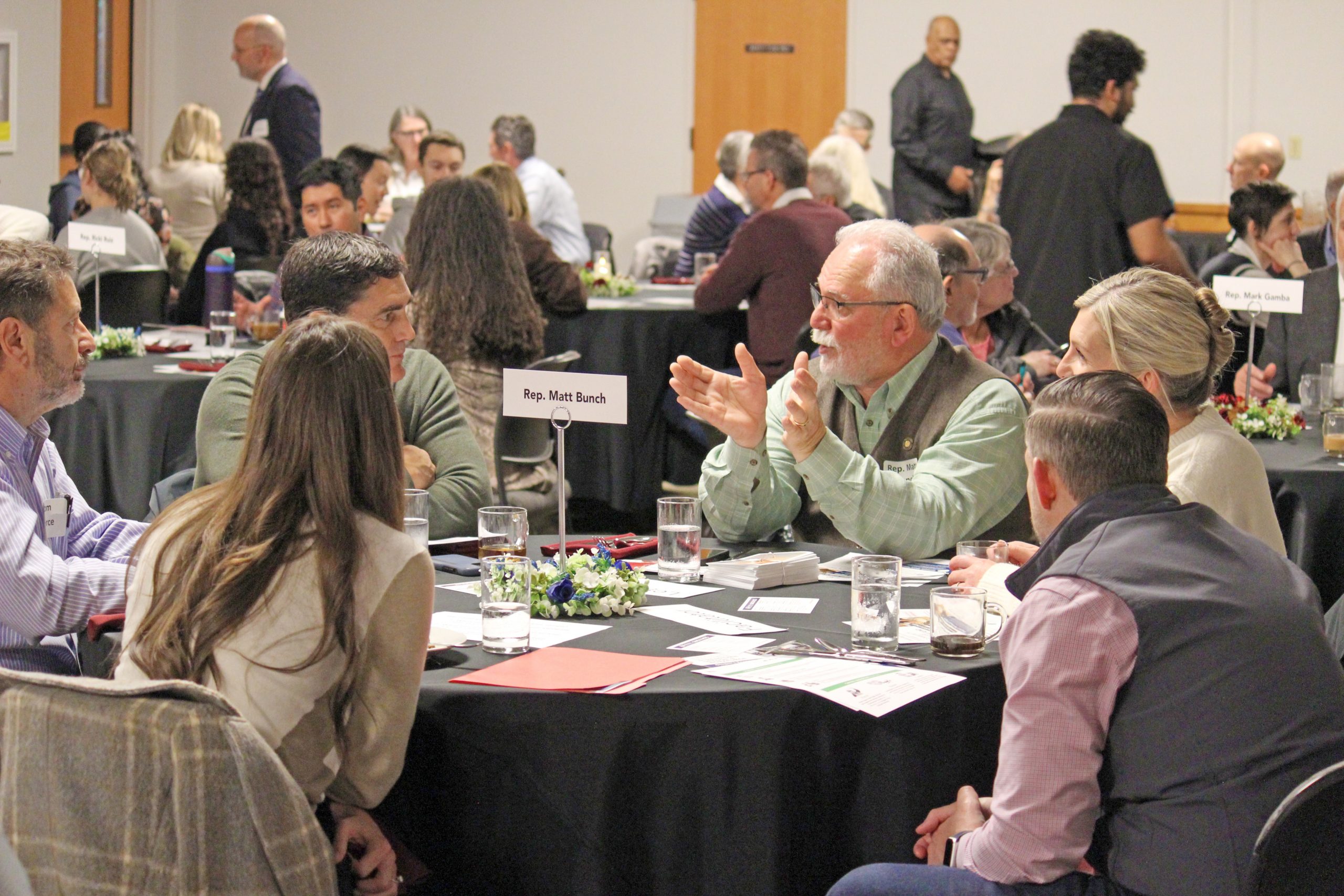
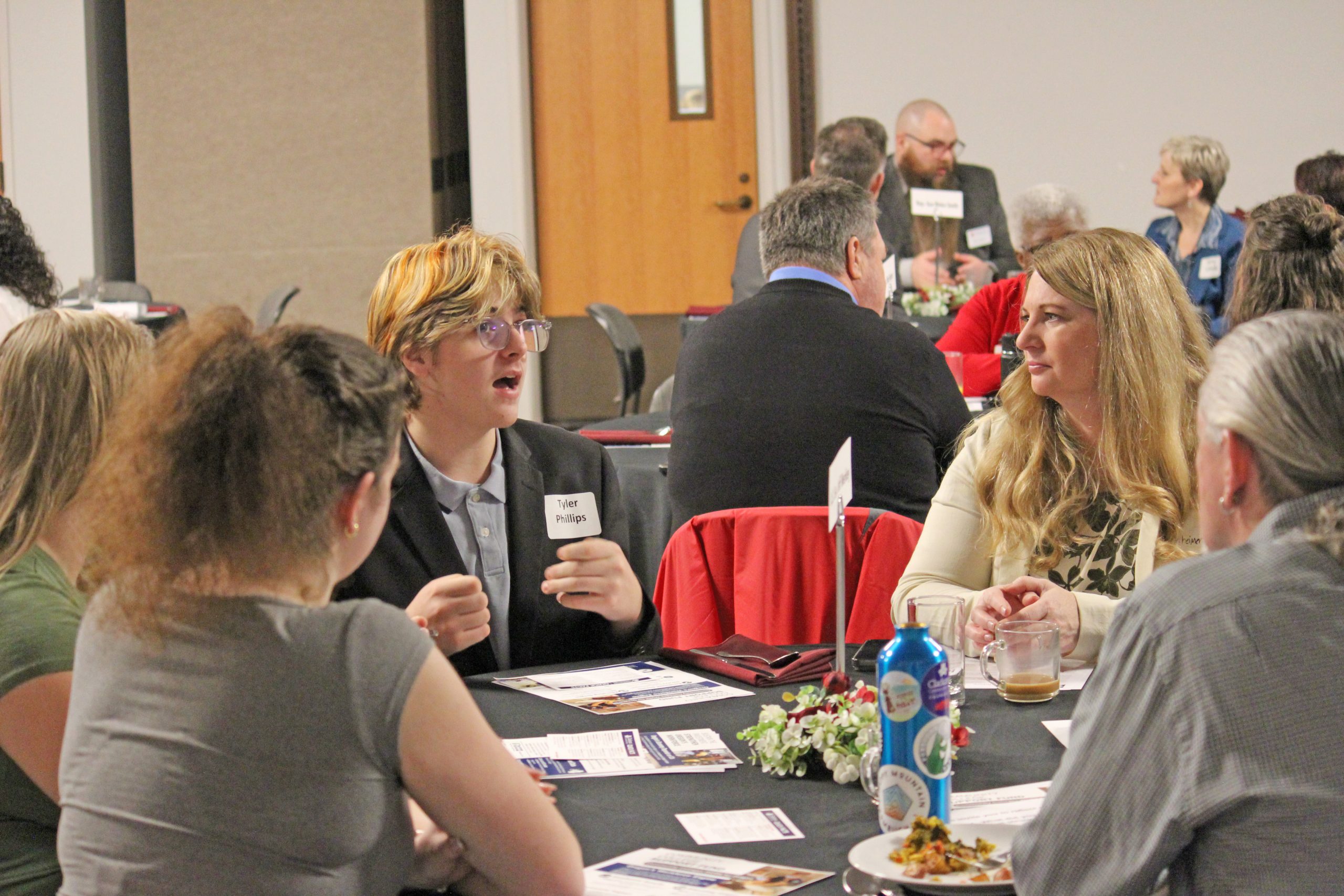
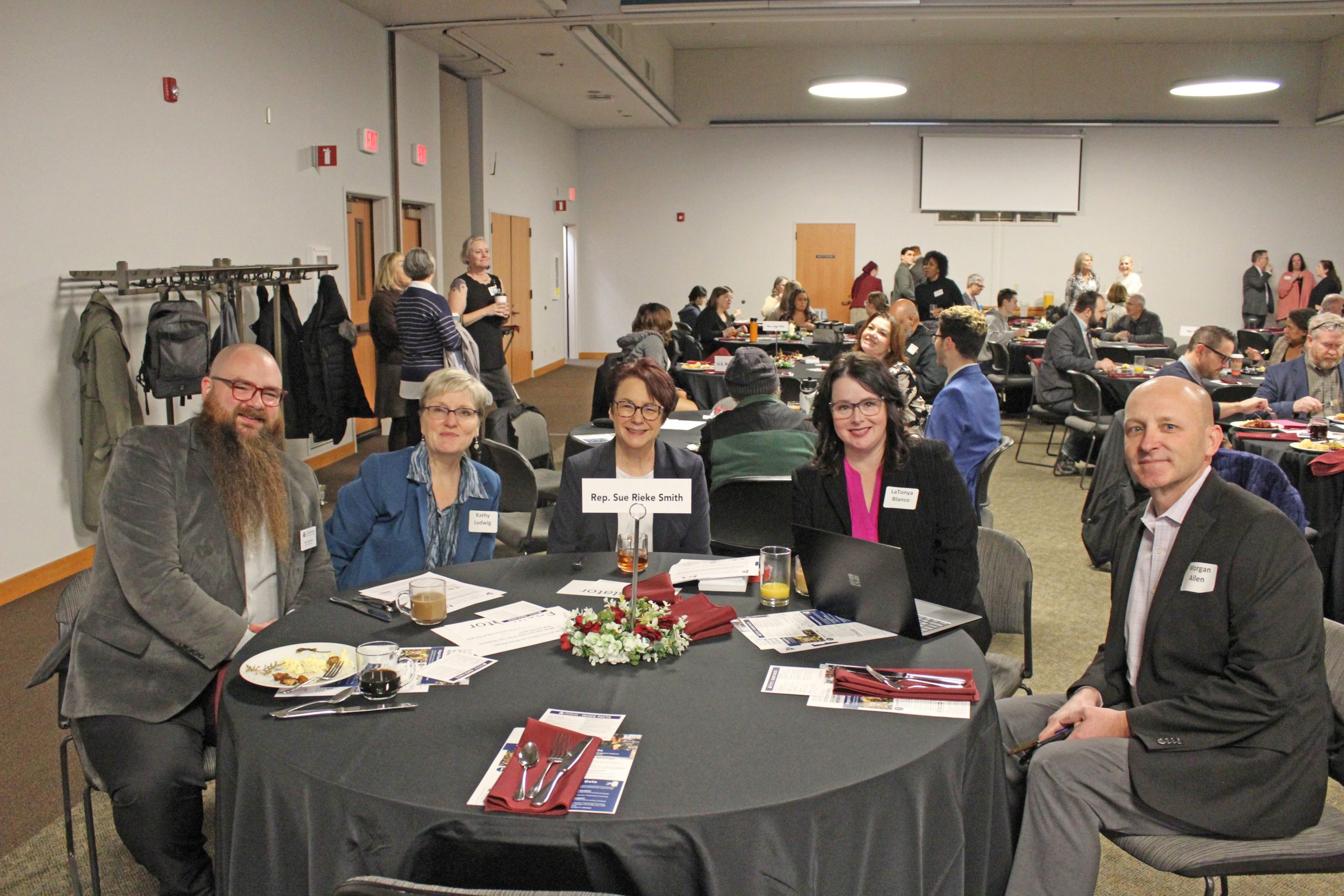
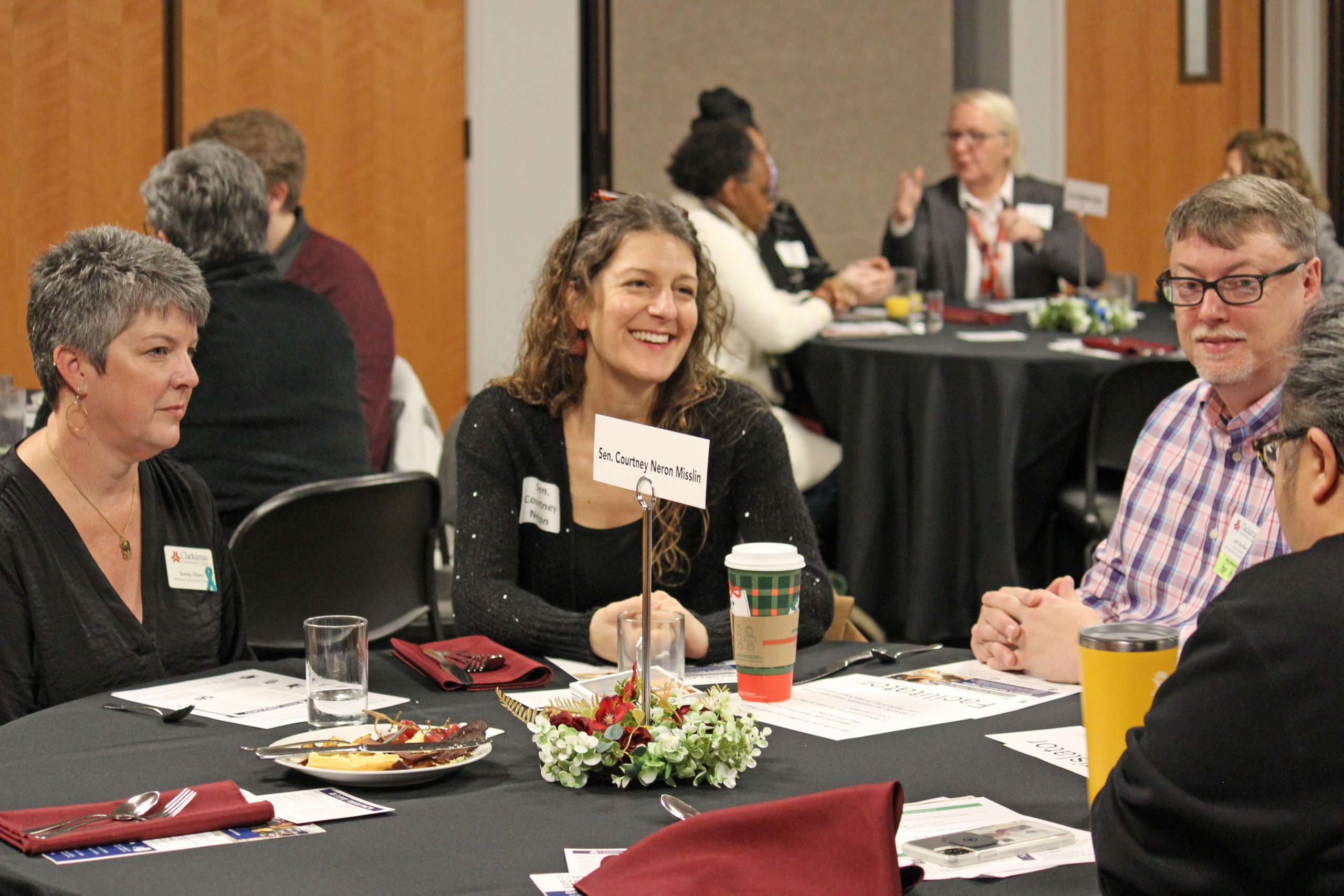
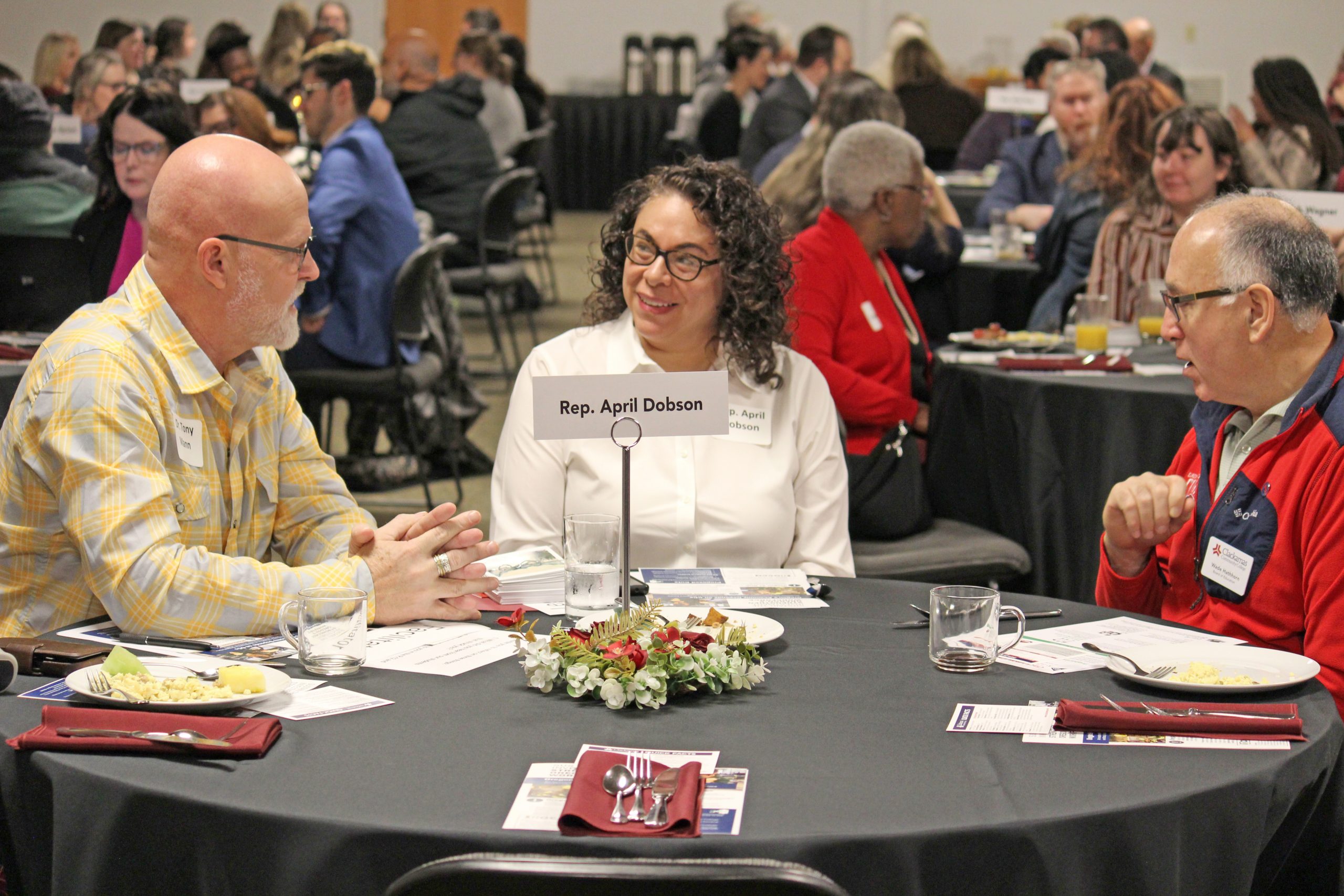
The powerful impacts of public education on students, families and communities were showcased Dec. 10, as Clackamas Education Service District and Clackamas Community College partnered to host a legislative breakfast on the CCC campus. This annual event provides an opportunity for regional elected officials to gather with K-12 and higher [...]

Go to Top